


 Cart
Cart
 sales@molnova.com


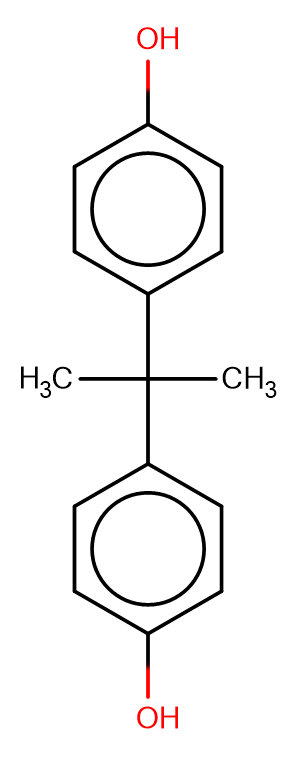
Bisphenol A
CAS No. 80-05-7
Bisphenol A( —— )
Catalog No. M20359 CAS No. 80-05-7
Bisphenol A is a starting material for the synthesis of plastics primarily certain polycarbonates and epoxy resins as well as some polysulfones and certain niche materials. It exhibits estrogen-mimicking hormone-like properties.
Purity : >98% (HPLC)
 COA
Datasheet
HNMR
HPLC
MSDS
Handing Instructions
COA
Datasheet
HNMR
HPLC
MSDS
Handing Instructions
| Size | Price / USD | Stock | Quantity |
| 100MG | 41 | In Stock |


|
| 200MG | Get Quote | In Stock |
|
| 500MG | Get Quote | In Stock |
|
| 1G | Get Quote | In Stock |
|
Biological Information
-
Product NameBisphenol A
-
NoteResearch use only, not for human use.
-
Brief DescriptionBisphenol A is a starting material for the synthesis of plastics primarily certain polycarbonates and epoxy resins as well as some polysulfones and certain niche materials. It exhibits estrogen-mimicking hormone-like properties.
-
DescriptionBisphenol A is a starting material for the synthesis of plastics primarily certain polycarbonates and epoxy resins as well as some polysulfones and certain niche materials. It exhibits estrogen-mimicking hormone-like properties.
-
In Vitro——
-
In Vivo——
-
Synonyms——
-
PathwayOthers
-
TargetOther Targets
-
RecptorOthers
-
Research Area——
-
Indication——
Chemical Information
-
CAS Number80-05-7
-
Formula Weight228.29
-
Molecular FormulaC15H16O2
-
Purity>98% (HPLC)
-
SolubilityDMSO:45 mg/mL (197.11 mM)
-
SMILESCC(C)(c1ccc(O)cc1)c1ccc(O)cc1
-
Chemical Name——
Shipping & Storage Information
-
Storage(-20℃)
-
ShippingWith Ice Pack
-
Stability≥ 2 years
Reference
1.Gramecskledar D Peterlin MaIL . Bisphenol A and its analogs: Do their metabolites have endocrine activity?[J]. Environmental Toxicology and Pharmacology 2016:S1382668916302447.
molnova catalog



related products
-
Turkesterone
Turkesterone is a phytoecdysteroid possessing an 11alpha-hydroxyl group, also is an analogue of the insect steroid hormone 20-hydroxyecdysone.
-
CM 346
Afobazole (CM346) is an anxiolytic drug; produces anxiolytic and neuroprotective effects without any sedative or muscle relaxant actions.
-
CFP10 (71-85)
CFP10 (71-85)
